How to open a bank account in France as a foreigner (2026 guide)




Article summary
This guide covers every option available to you: the types of accounts that exist, the documents each bank will ask for, which banks are genuinely accessible to foreigners, a step-by-step walkthrough of the process, and what to do if your application is rejected. By the end, you will know exactly where to start.
Opening a French bank account sounds like a small admin task. In practice, it is one of the first things that can derail your move.
- Your landlord wants a French IBAN to set up rent transfers.
- Your employer’s payroll team needs a RIB (Releve d’Identite Bancaire) before your first paycheck.
- The CAF (Caisse d’Allocations Familiales) requires one before processing any housing aid.
- The list goes on…
The frustration most newcomers hit is structural : you need a bank account to get an apartment. And you need an apartment to get a bank account. This catch is not unique to France, but it is particularly pronounced here, and understanding it upfront saves you weeks of wasted effort.
Compte courant (current account)
The compte courant is the standard day-to-day account.
It handles salary deposits, direct debits, bill payments, and card transactions. This is the account you need first. Once it is open, you receive a RIB, which is the French bank identity document containing your IBAN and BIC. Almost every administrative step in France requires a RIB. Think of it as your financial passport within the French system.
❗To open a compte courant, you must be a resident in France, meaning you have a valid visa or residency status and a French proof of address. If you do not have those yet, see the section on non-resident accounts below.
Concerned French visas :
Compte non-resident (non-resident account)
If you have not yet established residence in France (fewer than 183 days per year, or not yet a tax resident), you are technically eligible for a compte non-resident. This is a basic current account with more restrictions: lower withdrawal limits, no overdraft, and often no credit card. Monthly fees tend to be higher.
The catch is that most traditional French banks do not advertise this product. You have to ask, and not every branch will agree to open one. Many will decline entirely. In practice, neobanks handle this situation far more gracefully, and they are almost always the better path if you are arriving without a full set of French documents.
Livret A (savings account)
The Livret A is a regulated, tax-free savings account available at every French bank. It is separate from your current account and is commonly used for emergency funds or short-term savings. The interest rate is set by the Banque de France.
As of early 2026, the rate sits at 1,5%. Foreign residents can open a Livret A once their current account is established.
Documents you need to open a French bank account
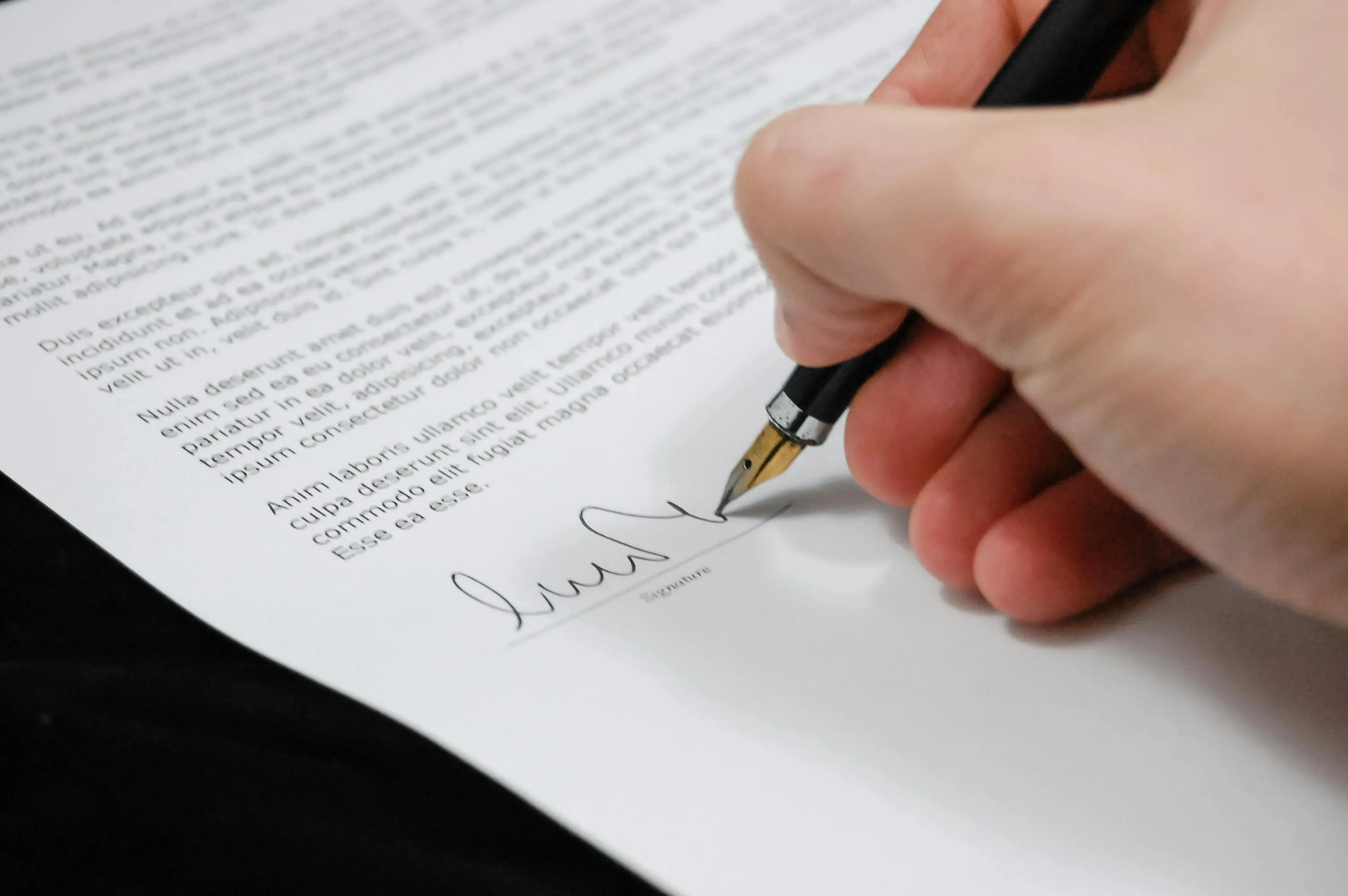
Every bank has its own exact list, but three categories of documentation come up without exception.
- Proof of identity: A valid passport works for all nationals. EU citizens can use their national ID card. French driver’s licences are not accepted as standalone ID. If you hold dual nationality, bring the passport from the country whose visa you are entering on.
- Proof of French address (justificatif de domicile): This is where most newcomers get stuck. Accepted documents include a rental contract, an EDF (electricity) bill, or a phone bill. If you are in the first days of your move and have none of these, there are workarounds: some banks accept a letter from your employer confirming your work address; others allow a family member or friend’s proof of address if you are staying with them.
- Proof of status:
- For employees: a signed employment contract or the most recent payslip.
- For visa holders not yet employed: your long-stay visa or titre de sejour.
- For students: a certificat de scolarite (enrollment certificate) or student card.
- For self-employed: a SIREN registration certificate from the INSEE.
Some banks ask for additional documents: a recent bank statement from your previous bank, a reference letter, or proof of income. Traditional banks are more likely to request the full set. Neobanks typically ask for identity and address only.
One practical note on translation: if your documents are not in French, certain banks will require a traduction assermentee (certified translation by a sworn translator). This is not universal, but it is common enough that you should ask your chosen bank before your appointment.
Which banks are actually accessible to foreigners moving to France
Traditional French banks (branches, full services)
The main names are BNP Paribas, Societe Generale, Credit Agricole, LCL, and La Banque Postale.
These banks offer the full range of services: current and savings accounts, mortgages, insurance, business banking. They have physical branches in most cities and some have dedicated international teams.
The honest picture: opening an account at a traditional French bank as a recent arrival is slow and document-heavy. Appointments are required. Staff speak French, not English. Processing takes one to three weeks including card and PIN delivery by post.
- Societe Generale is one of the most demanding on documentation.
- BNP Paribas and Credit Agricole are slightly more flexible.
- La Banque Postale deserves a special mention. As a public-sector institution, it has a legal obligation to serve all residents in France regardless of financial history. If other banks turn you down, La Banque Postale is the most likely traditional bank to say yes.
Traditional banks are the right choice for people who are already resident with a full document set, and who want mortgage or credit services in the medium term. For everyone else, especially in the first weeks of a move, a neobank is faster.
Neobanks and online banks accounts for France (fast, English-friendly)
Wise: our top pick. Wise is not a French bank in the traditional sense, but it gives you a real EUR IBAN, a multi-currency account that holds and exchanges 40+ currencies, and a Wise debit card accepted anywhere Mastercard is.
The key advantage for newcomers: you can open a Wise account before you leave your home country, using your US or UK address, and have a working EUR account ready from day one in France. Fees are transparent and low. Wise is particularly well-suited as a bridge account while you sort out a traditional French bank, or as a long-term solution if you regularly move money between currencies.
bunq. A Dutch neobank with a French IBAN and one of the fastest onboarding processes available. You can be set up within a few minutes on the app. bunq accepts non-EU passports from most major countries (US, UK, Canada, Australia and many others) and does not require a French proof of address. Accounts start around €3.99/month for the basic tier. bunq is consistently the most practical first account for arrivals who need a French IBAN quickly.
Nickel (Compte-Nickel). Nickel is available at tobacco shops (bureaux de tabac) across France. Walk in, show your passport, pay €20 for the year, and leave with a working bank card and French IBAN. No income proof, no appointment, no minimum balance. It is the most accessible banking option in France by a significant margin. The account is basic and not suitable as a long-term primary account, but as a stopgap while you set up something more robust, nothing beats it for speed.
N26. A German neobank that accepts proof of address from any EU country, not just France. Useful if you are coming via Germany, Spain, or another EU country first. N26 provides a French IBAN and a decent mobile banking experience, though customer support has been inconsistent in recent years.
Revolut. Revolut is a multi-currency account, not a French bank. On premium plans, it provides a French IBAN. It is best used alongside a primary account for international transfers and currency exchange, rather than as your main French account.
- Choose your bank. If you need something working immediately, start with Wise (can be done from home) or bunq (same-day once in France). If you want a traditional French bank account for long-term use, choose BNP Paribas or Credit Agricole and book an appointment online.
- Gather your documents. Identity, proof of address, proof of status. Get physical and digital copies of everything. If your documents are not in French, check with the bank whether a certified translation is required.
- Apply online or book an appointment. Neobanks are fully digital. Traditional banks require a prise de rendez-vous (appointment) at a branch. BNP Paribas and Credit Agricole both allow online appointment booking.
- Submit documents and wait for approval. Neobanks: approval in minutes to 48 hours. Traditional banks: one to three weeks, including internal review and document verification.
- Receive your RIB. For neobanks, your RIB is available in the app immediately after approval. For traditional banks, it is included in the welcome pack, usually delivered by post.
- Receive your bank card and PIN. Traditional French banks send your card and PIN separately, by post, a few days apart. This is standard practice, not a problem. Neobanks issue a virtual card immediately and a physical card within a week.
- Register you RIB everywhere. Once you have it, sent it to your employer's HR team and register it with the CPAM (Caisse Primaire d'Assurance Maladie) for healthcare reimburesements. Both need it urgently. Do not wait.
✅ One practical tip that most guides skip: when setting up online banking at a traditional French bank, expect the process to take longer than you think. Login credentials often arrive separately from the card, and activating online access sometimes requires a branch visit or a phone call. Budget time for this before you need to make your first bank transfer.
What to do if your bank account application is rejected

Rejection happens. French banks can refuse an application without disclosing the reason. If this happens, the first step is to request a lettre de refus (letter of refusal) from the bank. They are legally required to provide it.
France has a legal mechanism that guarantees every person the right to a bank account. It is called the droit au compte (right to account), established under Article L312-1 of the Code monetaire et financier. Here is how it works:
Take your lettre de refus, along with your identity document and proof of residence, to a branch of the Banque de France. You can find your nearest branch at banque-de-france.fr. Alternatively, you can file the request online through the Banque de France website. Within three business days, the Banque de France will designate a bank that is legally required to open an account for you.
The designated bank is typically La Banque Postale. The account provided is a basic compte de depot with a debit card and core banking services. It is not a full-featured account, but it gives you a working French IBAN, which is what you need to get the rest of your admin moving.
How to switch banks or close your French account
If you want to move to a different bank after settling in, a regulation called the mandat de mobilite bancaire (banking portability mandate) makes it straightforward. Your new bank handles the entire transfer: standing orders (virements permanents), direct debits (prelevements), and the communication to your old bank. The process must be completed within 22 business days and is free of charge. You initiate it at the new bank, not the old one.
If you are closing an account entirely without switching, do it in the right order.
- Cancel all standing orders and direct debits first.
- Confirm with each payee (employer, CAF, phone provider) that they have your new account details.
- Once all payments have cleared, request closure in writing and ask for a written confirmation that the account is officially closed.
=> This prevents unexpected charges or reactivation.
How EasyStart can help
Opening a bank account in France is rarely just a banking question. It sits at the intersection of your visa status, your proof of address, your employment situation, and the broader timeline of your relocation. Getting one step wrong can delay everything else.
At EasyStart, we support future expats throughout their administrative journey to France. Rather than navigating each procedure alone, our clients work through the key steps in the right order, with the right documents ready at each stage.
Our team helps clients with:
- preparing France visa applications
- organizing the administrative process for relocating to France
- settling in services and opening a French bank account
- understanding residency requirements and legal obligations
Free consultation
Planning your move to France? Let's talk.
Book a free 15-minute call. We'll look at your profile and tell you exactly where you stand.
- Eligibility confirmed in your first call
- Fixed price, no hidden costs
- Dedicated English-speaking advisor
- 99% approval rate across 1,200+ cases