Getting a Mortgage in France: 2026 Guide




Article summary
Buying property in France as an international expat is more achievable than most people assume. French banks lend to non-residents, 2026 rates have stabilised between 3.5% and 4.25% on 20-year fixed terms. Long-term fixed mortgages remain the European benchmark for predictability. The real challenge isn't the loan itself, it's coordinating it with your visa, your French tax number, your bank account, and the rest of your administrative installation.
Buying property in France as an international resident is more achievable than most people assume. French banks lend to non-residents, the European Central Bank has stabilised rates, and the legal framework around real estate offers genuine protection to foreign buyers.
The real challenge isn't the mortgage itself. It's coordinating the mortgage with everything else that comes with moving to France:
- your visa status
- your tax residency
- your French bank account
- your administrative paperwork.
Most guides treat French mortgages as a standalone process. In reality, it's one milestone inside a larger relocation journey, and the order in which you tackle each step determines whether the duration of the whole project.
✅ Yes. France is one of the most open mortgage markets in Europe for international buyers.
EU citizens and non-EU residents can secure financing from French banks, provided they meet eligibility criteria.
It helps to think in terms of three buyer profiles, because they don't face the same conditions:
- French tax residents. You live in France and pay tax here. You access the full range of mortgage products, the longest terms (up to 25 years), and the lowest rates.
- Non-residents from "preferred" countries. EU/EEA citizens, plus residents of the United States, Canada, Australia, New Zealand, Switzerland, Japan, and a handful of others. Banks view these borrowers favourably because of their financial profiles and historically low default rates.
- Non-residents from other countries. Possible, but expect tighter conditions, higher down payments, shorter terms, and fewer banks willing to engage.
Residents of jurisdictions French banks consider tax havens (Monaco, the Cayman Islands, the Bahamas, certain other offshore locations) face systematic refusals, and no negotiation is possible on this point.
How your visa and residency status shape your mortgage options
Your visa or residency status affects three things at once:
➡️ which banks will engage with you
➡️ what mortgage products you can access
➡️ and what supporting documents you'll need. Aligning your mortgage strategy with your visa strategy is one of the biggest time-savers in the entire process.

Visa understanding
Schengen visitor or short-stay: You can still buy property in France, but you'll be treated as a full non-resident. Expect 30–40 % down payment, a 15–20 year maximum term, and limited bank choices.
Long-stay visitor visa (VLS-TS Visiteur): The France Long-stay visitor visa allows you to be physically resident but not necessarily a tax resident. Banks may classify you somewhere between "non-resident" and "resident", with conditions depending on your income source and length of stay.
=>Download our Long Stay Visitor Visa EasyStart Guide (free)
Passeport Talent: The Talent Passport/Visa is a multi-year residence permit valid up to 4 years, designed for highly skilled professionals, entrepreneurs, researchers, intra-company transferees, and individuals of international renown. Once this visa is validated and you have a French employment contract, you're typically treated as a resident borrower with the same products, same rates, same terms.
-> Read also: France Talent Passport Business Creator Guide 2026
Entrepreneur or self-employed visas: French banks treat self-employment cautiously. The Entrepreneur or self-employed visa is made for non-EU nationals creating or running a business in France like freelancers, consultants, artists, micro-entrepreneurs, and founders of company structures like SAS or SARL.
You'll usually need 2–3 years of business income before mortgage applications become realistic.
=> Read also: Micro Entrepreneur status in France Guide
Residence card holders (Carte de Resident, 10-year card): Treated as residents for all practical purposes.
US citizens. A category of their own. Because of FATCA reporting, only specific French banks accept files from US persons. French financial institutions must disclose banking data of US persons with accounts exceeding $500,000, which deters some banks from lending to such profiles. The mortgage is entirely doable, it just requires going directly to banks that handle these files.
UK citizens (post-Brexit). Now treated as non-EU non-residents. The mortgage market remains open, but conditions match other non-EU buyers (higher down payment, shorter terms).
The practical takeaway: don't start the mortgage process before you know what visa you'll hold when you sign. Switching visa categories mid-process can reset your entire file.
Types of French mortgages available to expats
The market for French mortgages is dominated by long-term fixed-rate loans which is a real advantage compared to the UK or US, where short-term fixed terms force you to refinance every few years.
Fixed-rate mortgage (taux fixe)
The default in France and the right choice for almost all expat buyers. Your rate is locked at signing for the entire term : 15, 20, or 25 years.
Whatever happens to the ECB, the interbank market, or French rates afterwards, your monthly payment stays identical from month one to the final repayment. France remains the European stronghold of long-term fixed rates, where most other markets force a refinance every 3 to 10 years.
For expats, fixed-rate mortgages are rarely worth debating: you're already managing currency risk on your income, and you don't want a third variable in your monthly budget.
➡️ Choose this mortgage if you're a primary-residence buyer, a non-resident investor wanting predictable cash flow, or anyone who values certainty over hypothetical small savings.
Variable-rate mortgage (taux variable ou revisable).
Rare in France and increasingly unattractive. The rate moves periodically (usually annually) based on a reference index. Most variable products today are "capped" (capé), meaning the rate can only move within a defined range, typically ±1 % to ±2 % around the initial rate.
The math rarely favours the buyer: the starting rate is usually only 25 to 50 bps below the equivalent fixed rate, so you're trading near-certain modest savings for the risk of materially higher payments over 20 years.
Repayment / amortising mortgage (pret amortissable)
What 95% of French buyers use. Each monthly payment covers interest plus a slice of principal. Early in the loan, most of your payment goes to interest; toward the end, most goes to principal. By the final payment, the loan is fully repaid and you own the property outright.
As an illustration, on a €300,000 loan at 3.8% over 20 years, you'd pay roughly €1,790 per month, around €950 going to interest in the first month and almost all of it going to principal in month 240.
➡️ Choose this mortgage if you're buying a primary residence, a long-term family home, or any property you intend to keep and live in.
Interest-only mortgage (pret in fine)
A wealth-management product, not a standard financing tool. During the entire term, you pay only the interest and no principal. At the end of the loan, you repay the borrowed capital in a single lump sum. This works because the bank requires collateral, typically a securities portfolio pledged to the bank for the loan's duration, often equivalent to 30% to 50% of the borrowed amount. You cannot take an in fine loan without that asset backing.
The economic logic for non-resident investors: interest payments are fully deductible against French rental income (because no principal is amortising), which substantially lowers your French income tax on the rental property. You also keep your investable capital working in the markets instead of paying down the mortgage. The trade-off: total interest paid over the life of the loan is far higher than on an amortising mortgage, and you need a clear plan, and the cash or asset sale for the final balloon repayment.
➡️ Choose this mortgage if you're a non-resident buying rental investment property, you already hold significant investable assets, and your tax adviser has modelled the structure for your specific case.
Capped-rate mortgage (pret a taux cape)
A hybrid between fixed and variable. The rate can move with the market but cannot exceed a hard ceiling, typically initial rate + 1% or + 2%. You keep some upside if rates fall, with a protective ceiling on the downside. In practice, capped products carry fees and rate margins that erase most of the theoretical benefit, and the underlying variable rate often starts higher than an equivalent fixed rate. Banks offering capped products to non-residents tend to reserve them for specific profiles.
➡️ Choose this mortgage only if the bank explicitly proposes it and a broker has shown the math beats a comparable fixed-rate offer.
Bridging loan (pret relais), the expat relocation special
Useful when you're moving to France with property already owned elsewhere.
The bank advances 60% to 80% of the expected sale price of your existing property abroad, over a term of 12 to 24 months, with interest-only payments during the bridge. You use the advance as your down payment (and sometimes the full purchase price) for the French property, then repay the bridge in full once your other property sells. Not every French bank offers it to non-residents, and the property abroad usually has to be already listed for sale with a documented valuation.
For expats arriving from the UK, US, Middle East, or Asia with a primary residence to liquidate, this product can compress the relocation timeline by 6 to 12 months. You don't have to wait for the foreign sale to close before securing the French home.
➡️ Choose this if you own a property abroad you intend to sell within 24 months, and you need to buy in France before that sale completes.
Loan term: how long should you borrow for? The maximum is 25 years for residents, typically capped at 20 years for non-residents, and shorter still (15 years) for retirees or older borrowers. The trade-off across durations:
- 15 years: slightly lower rate, much higher monthly payment, lowest total interest paid over the life of the loan.
- 20 years: the standard compromise with moderate monthly payment, manageable total interest. This is the default for most expat buyers.
- 25 years: slightly higher rate, lowest monthly payment, highest total interest paid.
On the same €300,000 loan, the monthly commitment shifts roughly from €2,170 over 15 years to €1,790 over 20 years and €1,460 over 25 years (illustrative, actual numbers depend on your rate). The longer term gives you more borrowing capacity under the HCSF 35 % debt-ratio rule, because your monthly load is lower, directly useful if you're stretching to buy in Paris, Lyon, or another high-priced market.
Decision rule of thumb: go for the longest term you're offered if maximising borrowing capacity matters; choose 15 or 20 years if minimising total interest is the priority and your budget allows the higher monthly payment.
What French banks look for when providing mortgage: eligibility criteria
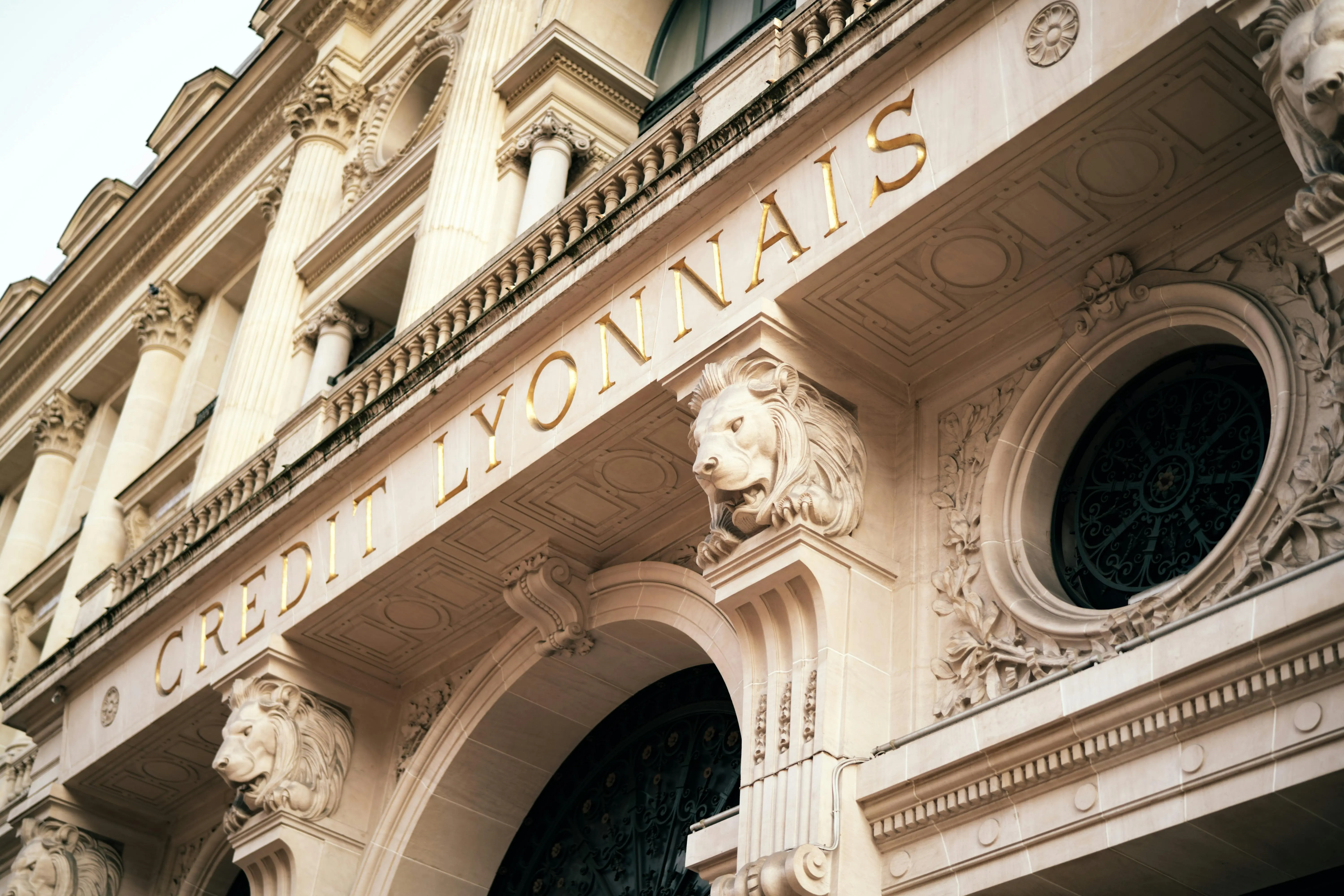
French banks apply broad criteria to all borrowers, then layer additional requirements for non-residents. The fundamentals:
The 35% debt-to-income ratio
This is a hard rule, not a guideline. Your total monthly debt obligations (including mortgages in your home country and the new French loan) must not exceed 35% of your gross household income. The High Council for Financial Stability (HCSF) enforces this nationally, and banks rarely deviate.
Reste a vivre (what’s left to live)
Beyond the 35% ratio, banks look at how much disposable income you'll have after all debts are paid. A high-earner with one child and a comfortable reste a vivre may get terms a less affluent borrower can't.
Down payment
- 20–30% is the realistic range for non-residents from preferred countries.
- For non-EU citizens, banks may request up to 40%. Don't forget that you also need to fund notary fees on top, typically another 7 to 8 % in cash due upon closing of the transaction.
Income proof
Pay slips, tax returns, employer letters. If you're paid in a foreign currency, banks apply a “discount” (typically 10-30 %) to your income to account for exchange rate risk. If you're self-employed, expect to provide 2 to 3 years of certified accounts.
The "compte miroir" requirement
Many banks require you to open a French current account and route a portion of your income (or a fixed monthly transfer) through it. This is partly a relationship requirement and partly a way to verify ongoing solvency.
Borrower's insurance (assurance emprunteur).
The borrower’s insurance is mandatory in practice. Premiums depend on age, health, and nationality, and typically add 0.10% to 0.60% per year to your effective borrowing cost. Some pre-existing conditions or residencies in specific countries can trigger exclusions or surcharges.
Age at maturity
Most banks cap the loan so it's repaid before you turn 75–80.
After the rate shock of 2023–2024, the market has stabilised. In early 2026, standard fixed-rate mortgages for prime profiles sit in the 3.0% to 3.5% range for 20-year terms, supported by the European Central Bank holding key deposit rates around 2.0 %1.
For international buyers in 2026:
- Resident borrowers, 20-year fixed: roughly 3.0% to 3.9%.
- Non-resident borrowers, 20-year fixed: typically between 3.50% and 4.25%2
- Non-resident premium: 25 to 60 basis points over resident rates, with the gap narrowing for strong profiles.
Your actual rate depends on country of residence, income currency, loan-to-value, and how attractive your overall file is to the bank. A salaried employee on permanent contract in Germany applying for a 60% LTV loan will get a noticeably better rate than a freelancer in the UAE applying for 75%.
Costs and fees: budgeting beyond the loan
The mortgage rate is only one piece of your real cost. Beyond the interest itself, expect a stack of one-off fees at signing, plus monthly and annual carrying costs once you're an owner.
Example
For a concrete sense of the all-in cost, here's a typical example for an expat buyer.
Purchase: €400,000 existing apartment, bought with a 70% LTV mortgage of €280,000 over 20 years at 3.80% fixed.
Cash required at signature:
- Down payment: €120,000
- Notary fees (~7.5%): ~€30,000
- Frais de dossier: ~€1,500
- Broker fees (~1%): ~€2,800
- Loan guarantee (~1%): ~€2,800
- Total upfront: approximately €157,000
Ongoing monthly:
- Mortgage payment: ~€1,670
- Borrower's insurance: ~€100
- Home insurance (annual prorated): ~€25
- Total monthly carrying cost: ~€1,795
Plus annually: taxe fonciere, typically €1,000 to €2,500 depending on the commune.
✅ Good rule of thumb: budget roughly 10% of the purchase price in cash on top of your down payment to cover notary fees, bank fees, broker, and guarantee. Most expats underestimate this by a wide margin and discover it during compromis negotiation, when it's too late to rebudget.
The French mortgage process step by step
A French property purchase follows a predictable choreography:
- Pre-approval (accord de principe): Submit your documents to one or several banks. You receive a non-binding indication of borrowing capacity. Allow 1–3 weeks.
- Property search and offer: Once you find the right property, you submit a written offer (offre d'achat).
- Compromis de vente: A binding preliminary contract signed at the notary's office. Includes a suspensive clause for mortgage approval, your deposit (typically 5–10%) is refunded if your loan is refused.
- Cooling-off period: period during which the buyer can withdraw without penalty.
- Formal mortgage application: Submitted in the weeks following the compromis.
- Offer of loan (offre de pret): The bank issues a formal offer. You then have a mandatory 11-day reflection period before you can accept.
- Acte authentique de vente: Final sale signed at the notary's office, typically 2 to 4 months after the compromis. Funds are released and keys handed over.
Realistic timeline: 2 to 3 months from accepted offer to final signature, sometimes longer when paperwork moves between jurisdictions.
The expat-specific timeline: sequencing matters
If you're moving to France with a property purchase in mind, the chronology looks like this:
6 to 12 months before arrival :
- Confirm your visa pathway. Your visa determines mortgage conditions, so this comes first.
- Open a French bank account if your situation allows (some neobanks accept non-residents).
- Begin documenting income (pay slips, tax returns) and translating key documents.
- Build a realistic budget including notary fees and reserves.
Arrival to month 3
- Validate your visa (OFII appointment if applicable).
- Apply for a French tax number (numéro fiscal / NIF), this can take 4 to 8 weeks.
- Secure a proof of address (justificatif de domicile): utility bill, rental lease.
- Start routing income through your French account if possible.
Months 3 to 6
- French income now visible through your French account.
- Pre-approval phase with banks becomes realistic.
- Begin serious property search.
Months 6 to 12
- Offer, compromis, mortgage application, signature.
The cardinal rule: a mortgage isn't won on signing day. It's won by preparing the right documents in the right order for 6 to 12 months beforehand.
Sources :
1- Blue Skies, Better Rates: French mortgage interest rate outlook for 2026
2- Mortgage in France for Non-Residents: 2026 Rates & Guide